Overview
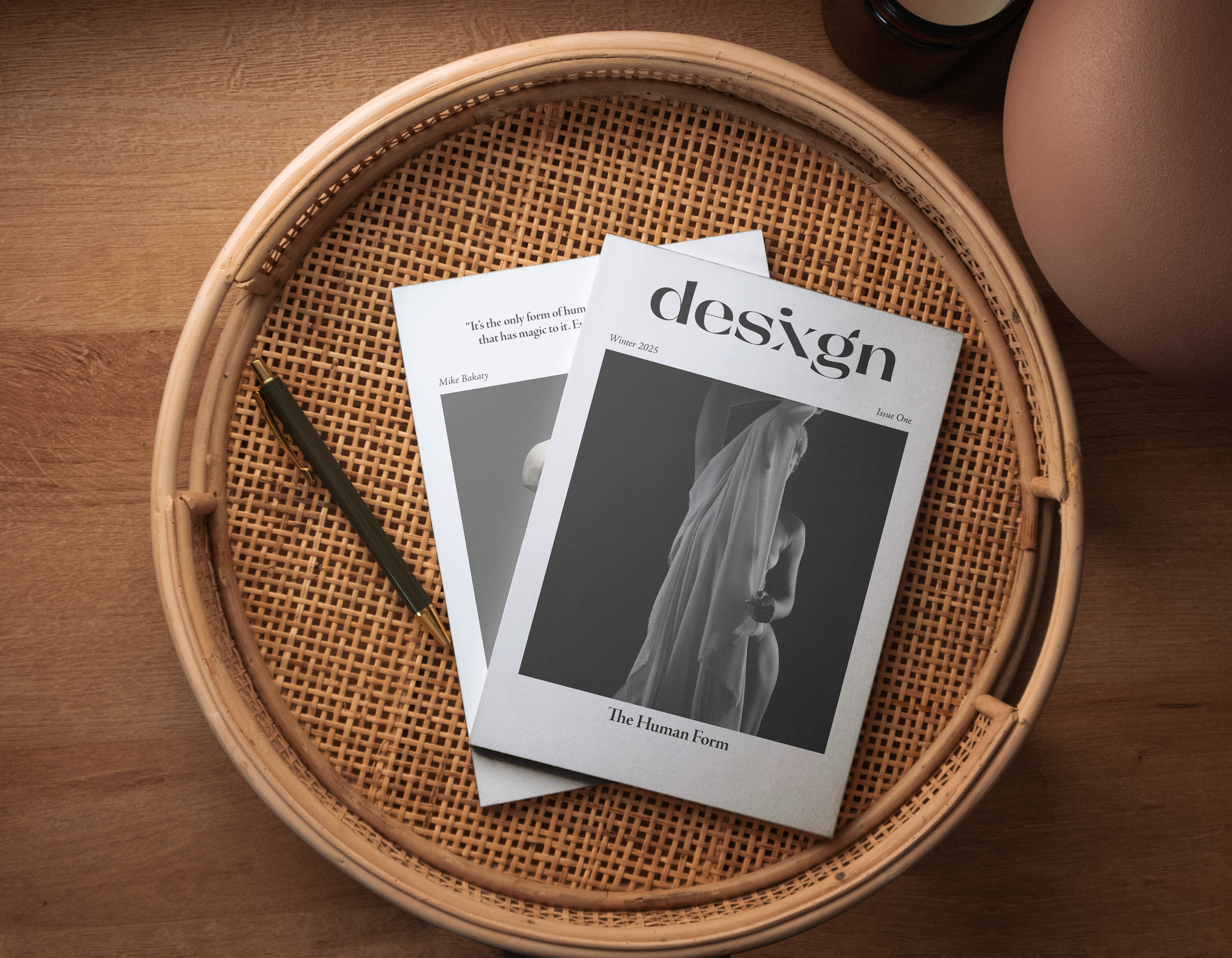
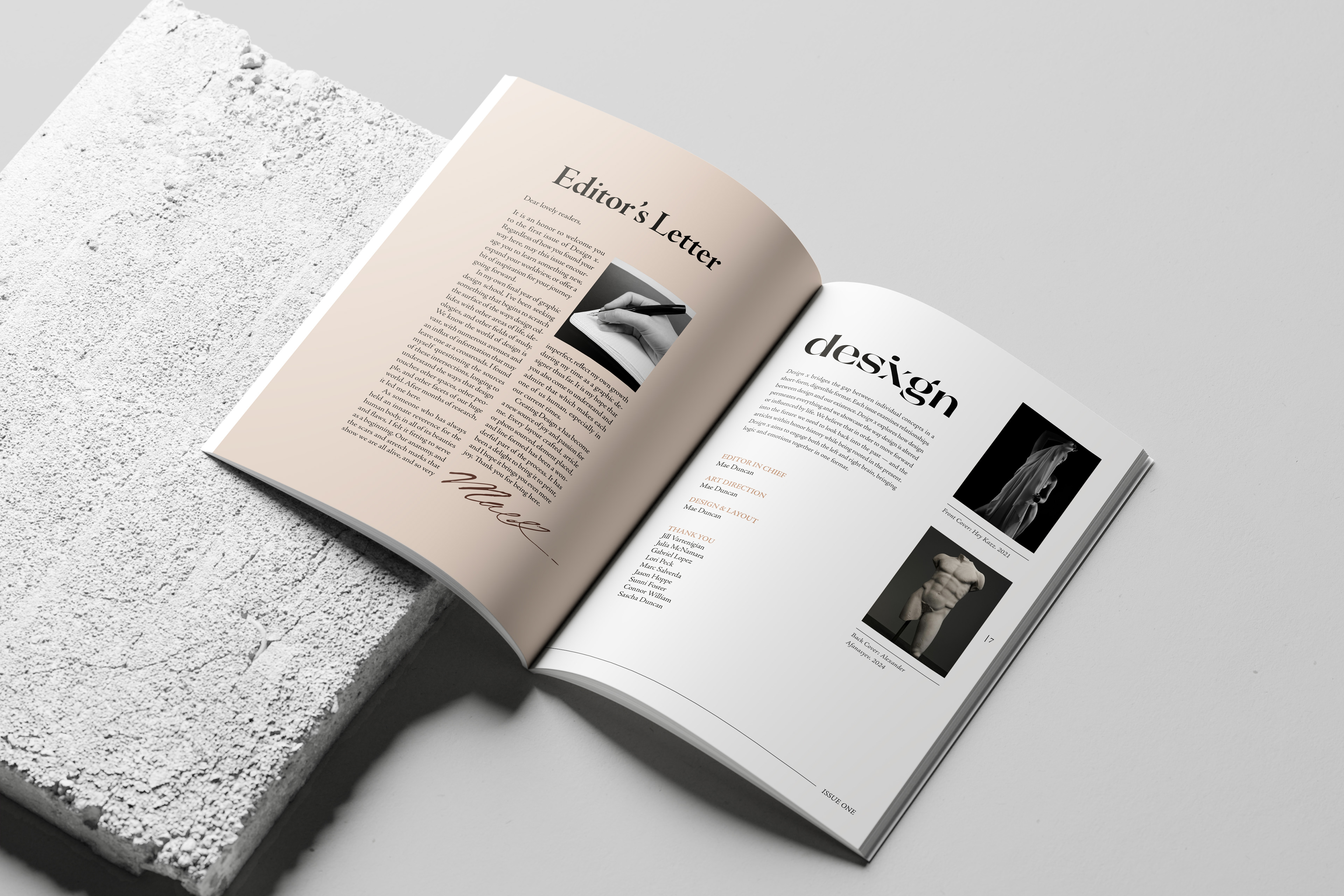
Design x bridges the gap between individual concepts in a short-form, digestible format. Each issue examines the complex relationships between design and our existence, exploring the ways design permeates everything we touch and see. We believe that to move forward, we must look back — honoring history while remaining rooted in the present. Design x aims to engage both the left and right brain, bringing logic and emotions together in one cohesive format.
Challenge
As designers, we know the field is vast, often leaving one at a crossroads amidst an influx of information.
Currently, there is a gap in the market for a publication that provides an in-depth perspective on the design industry through the lens of the lived human experience. I sought to create a source of media that connects designers with deeper concepts in other areas of life without being overwhelmingly dense.
Solution
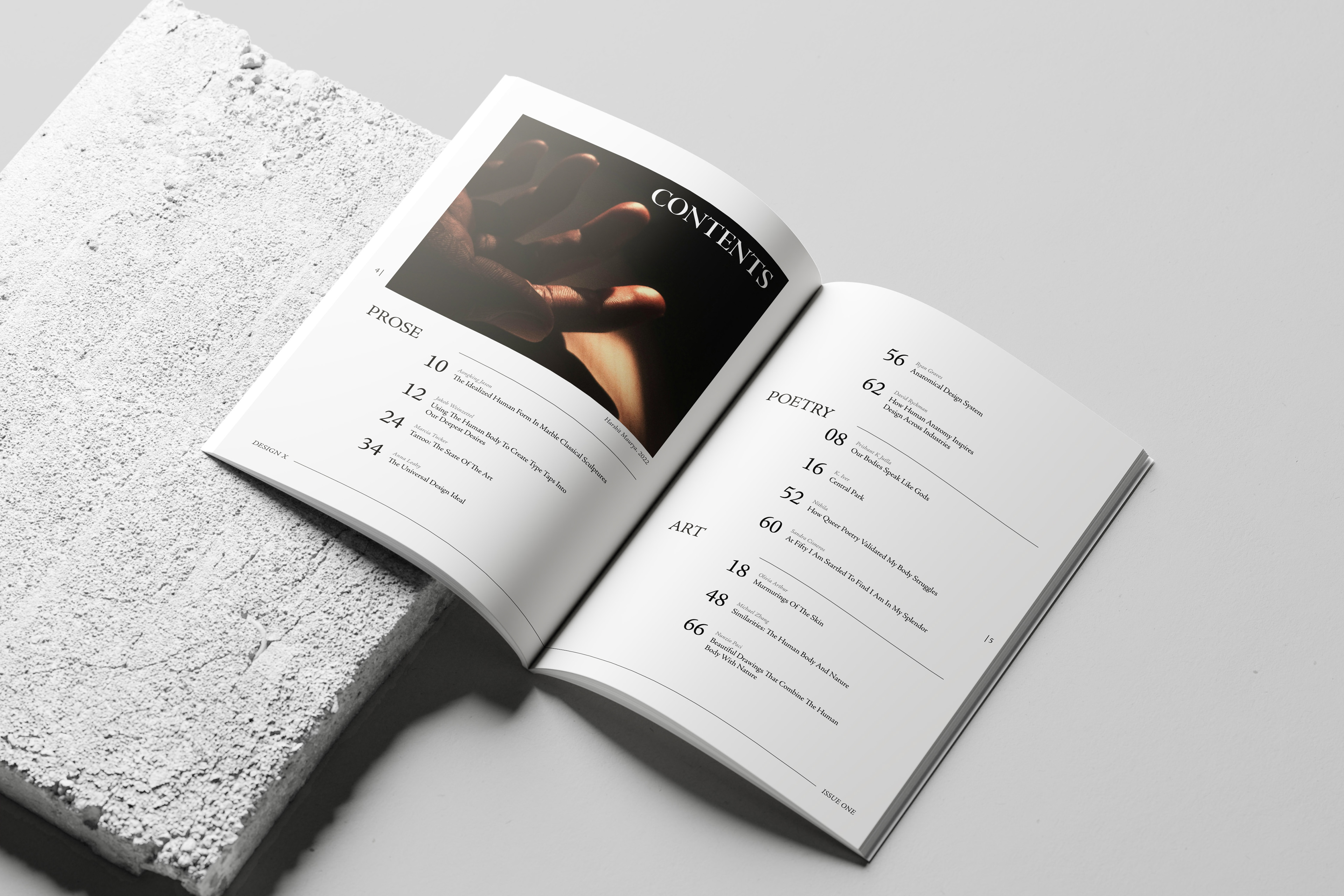
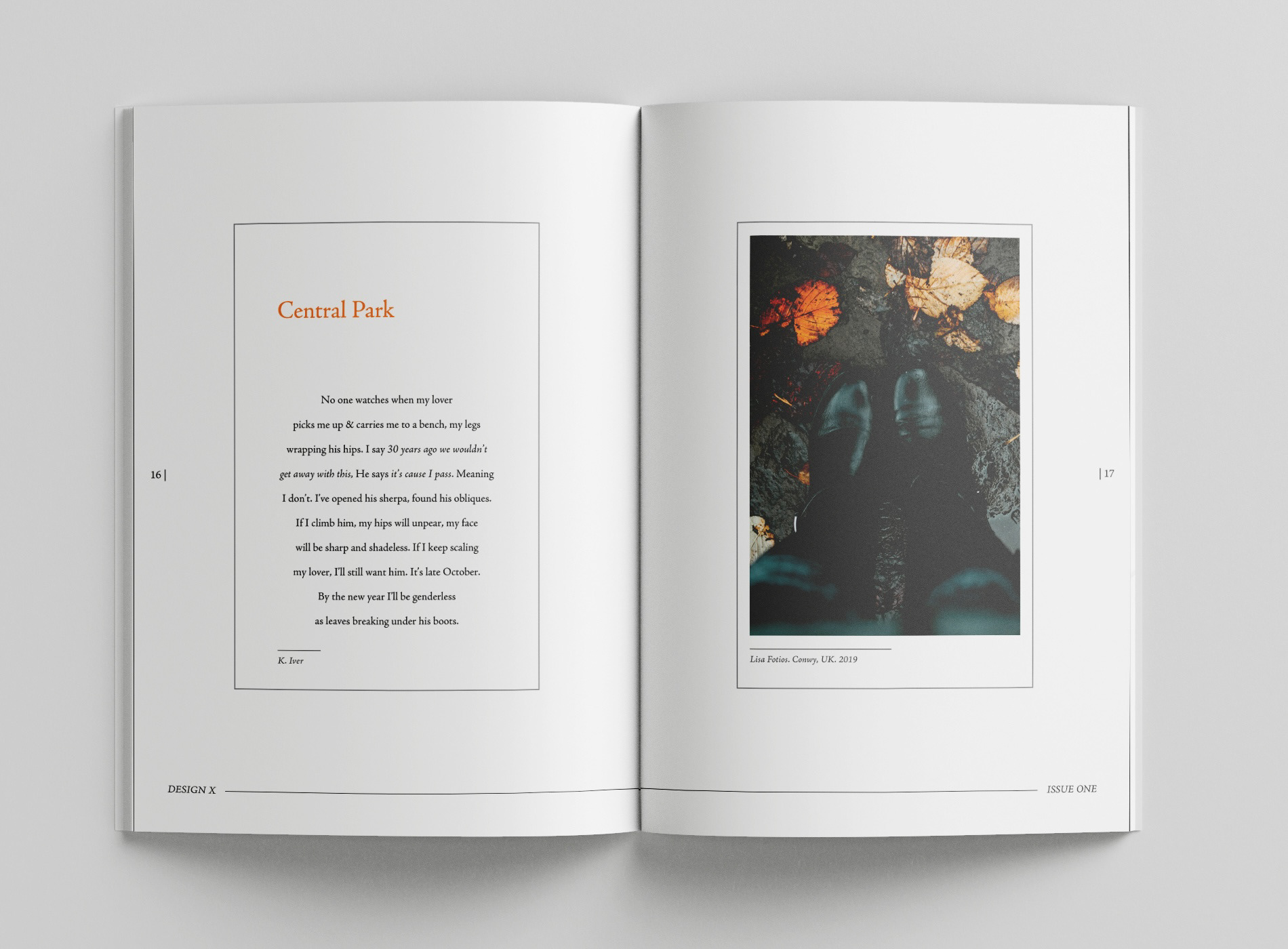
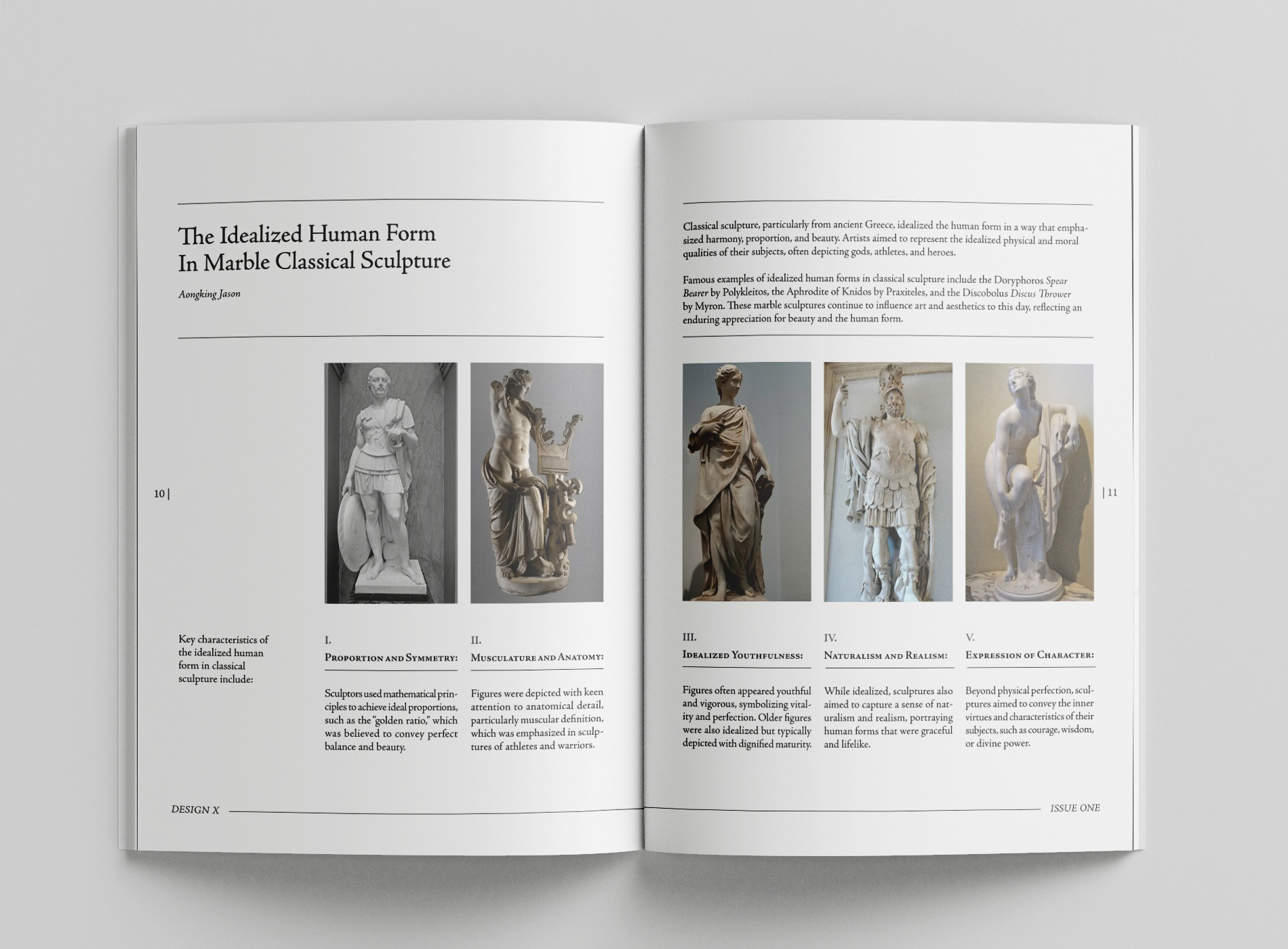
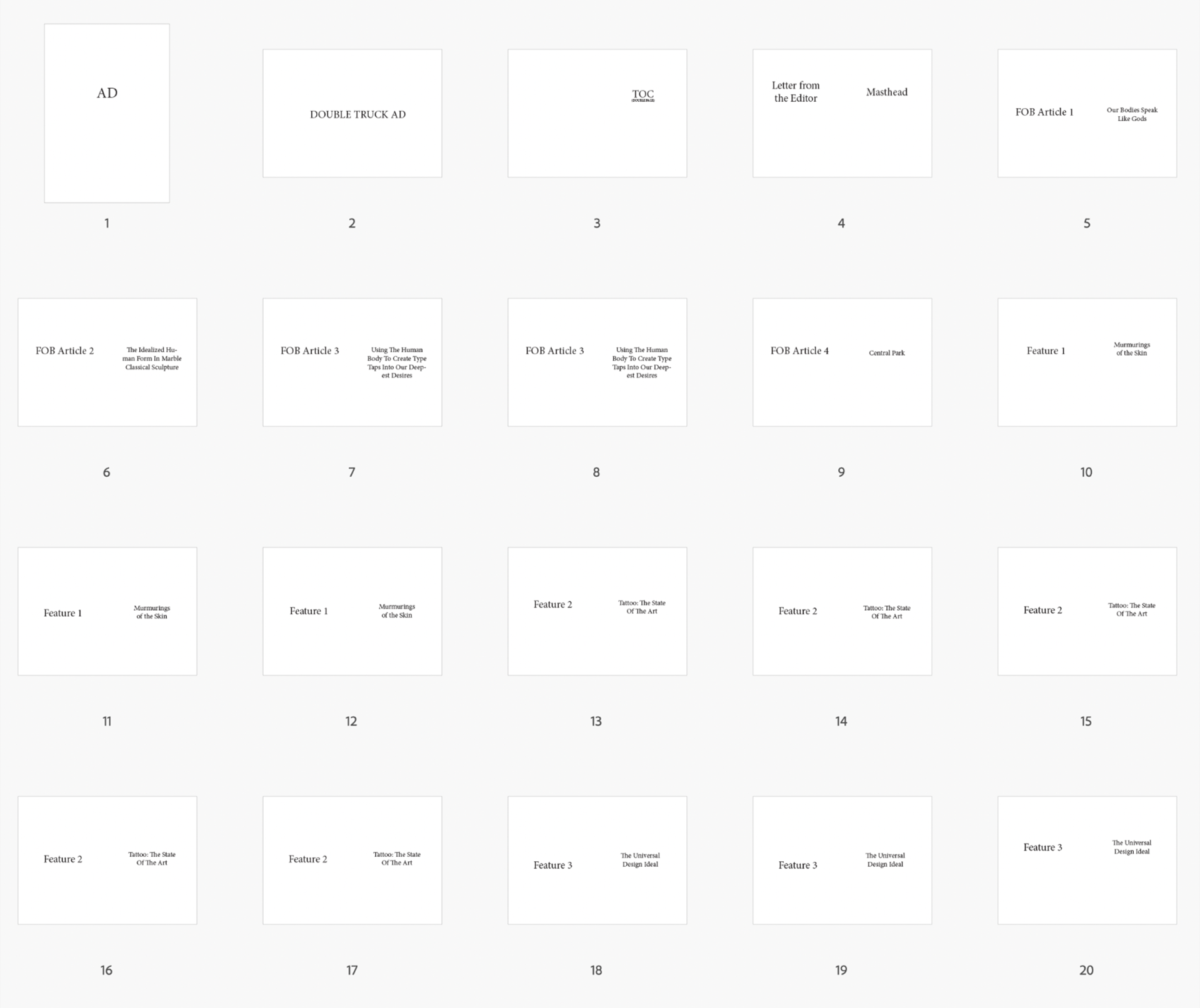
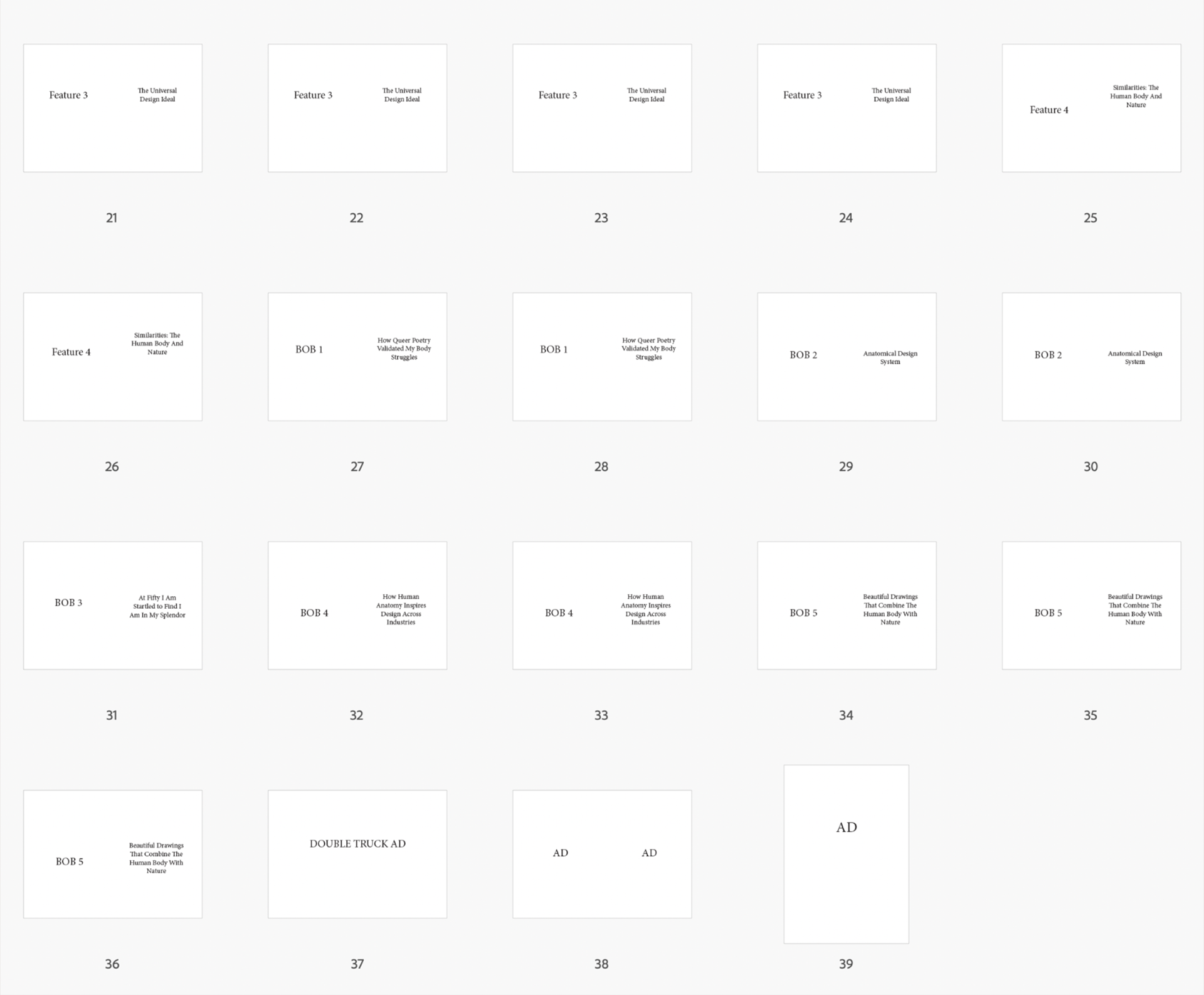
I created "The Human Form", an almost 80 page inaugural issue of Design x. This magazine features a curated blend of photography, poetry, and articles of varying lengths. To fully immerse myself in the tactile nature of the medium, I managed the project from initial concept to physical production. I chose to print and hand-bind the magazine myself to familiarize myself with the technical nuances of the printing process.
Completing production a week ahead of schedule allowed me to solidify my own process and transition into a mentorship role, aiding my classmates in their own physical production processes and reviewing microtype to ensure everyone finished with a magazine in their hands.
Project Specs:
Timeline:
15 weeks
Tools:
Adobe Indesign, Adobe Illustrator, Adobe Photoshop, Google Suite, Toggl (Time Tracking)
Roles:
Editor-in-Chief, Art Director, Researcher, Ideation/ Concept Curation, Layout Design, Typography, Print Finisher
Audience/ Demographic
Design x caters to curious individuals in the creative field who have limited time. It is designed to be both logical and emotional, providing information that remains applicable to a wide-ranging audience.
3 Personas:
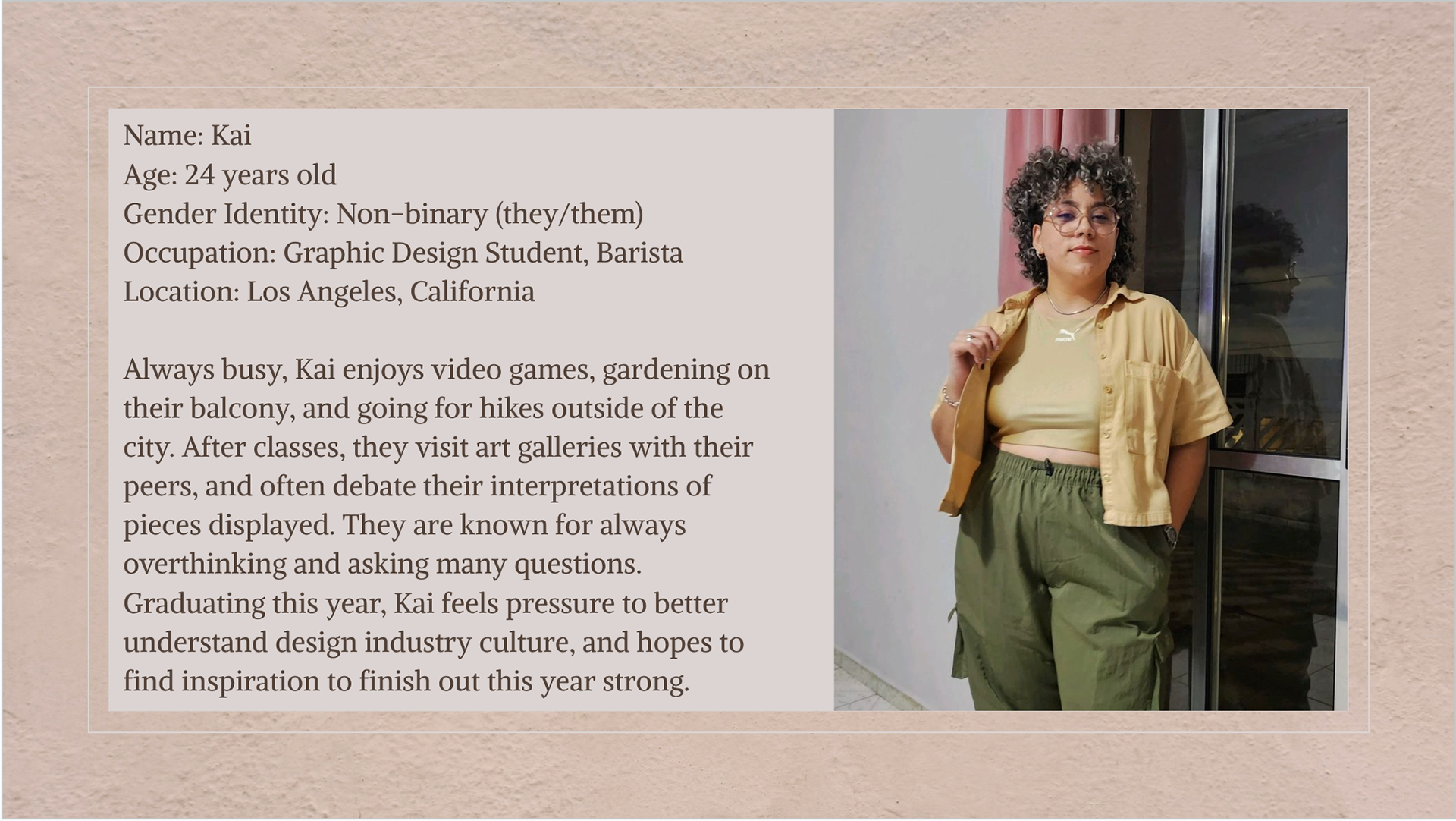
The Emerging Professional (Kai): Students navigating a transition into the industry who seek authentic inspiration and design culture insights.
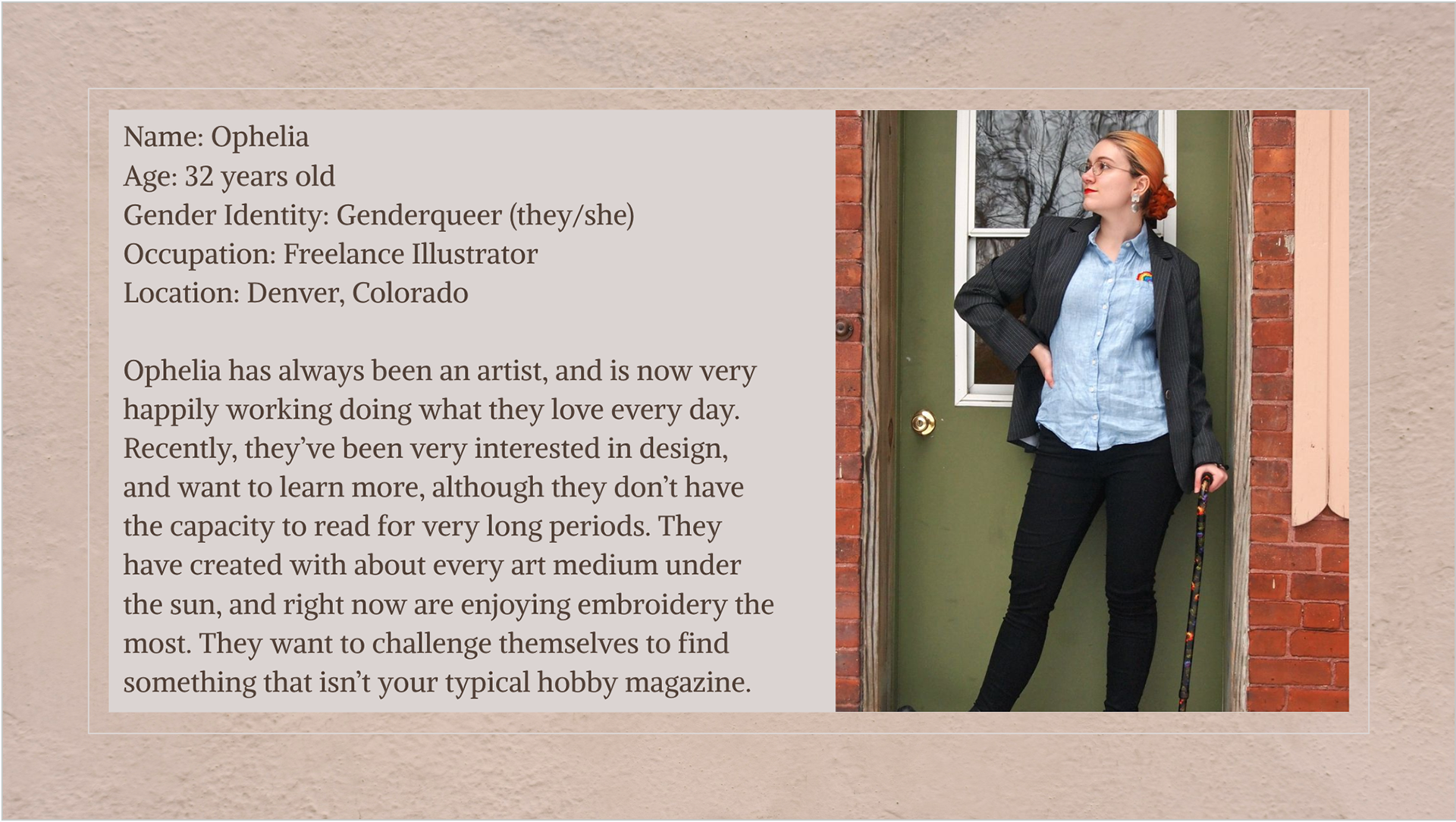
The Curious Artist (Ophelia): Creators who seek substance over "hobbyist" content and crave short-form, digestible connections.
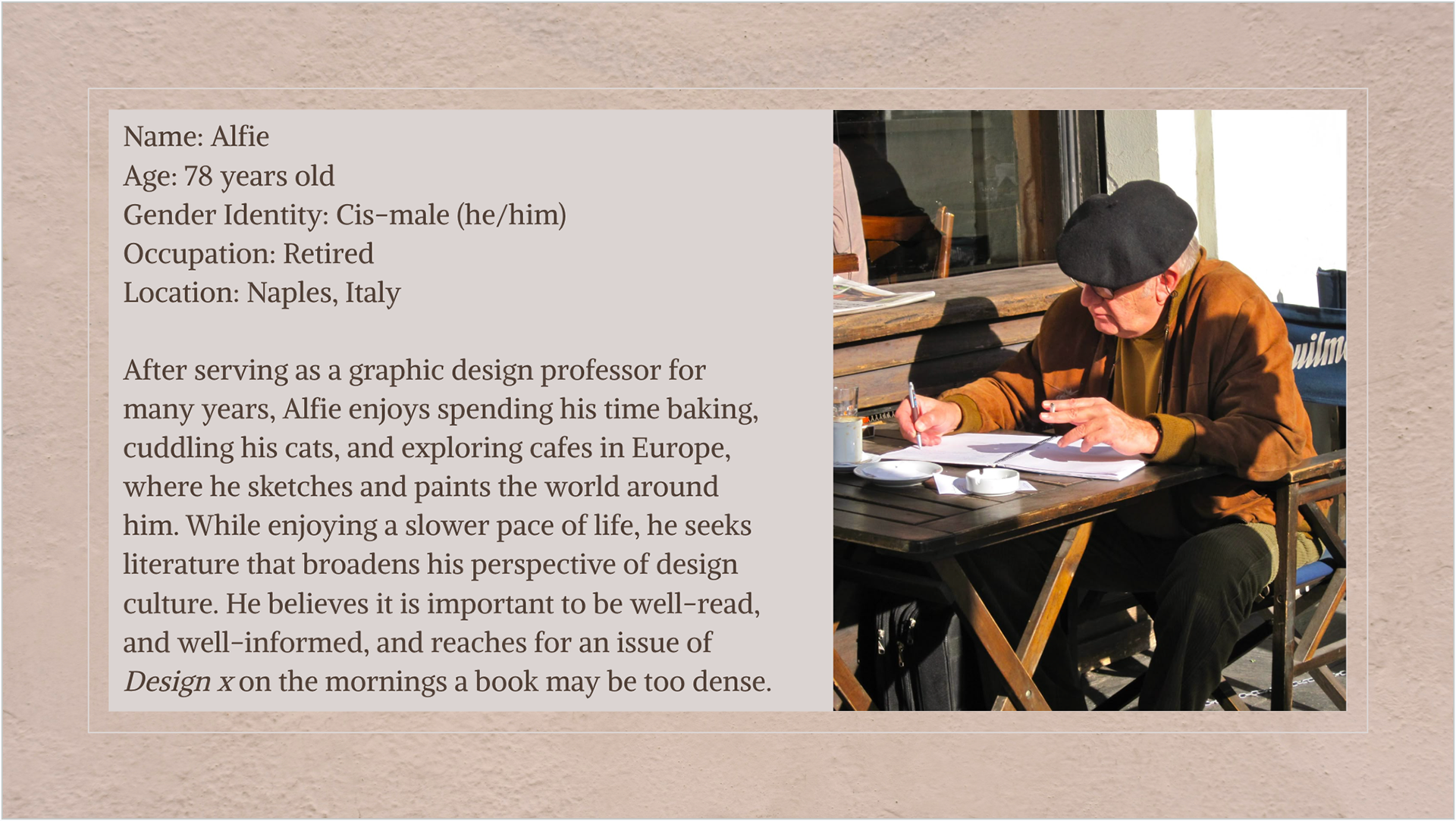
The Leisurely Learner (Alfie): Seasoned experts who value context and a slower pace, but appreciate an occasional longer-format article to study.
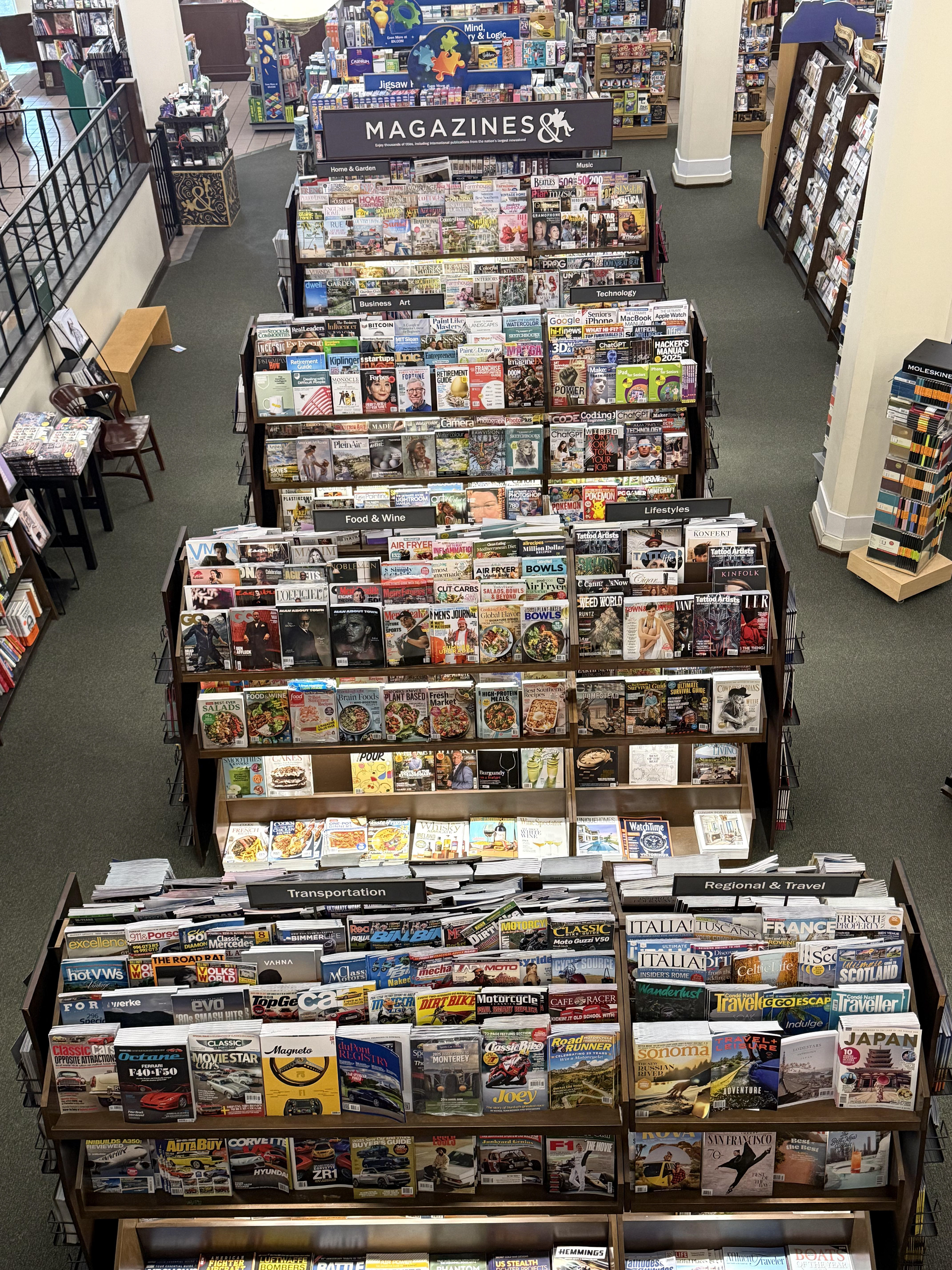
Significant time was spent documenting layouts, imagery, and styles from established publications. This immersion aided my ability to recognize established and successful patterns and apply a refined visual vocabulary to my own repertoire.
Brainstorming
The brainstorming phase included pitching my theme, researching my articles, sourcing my photography, and sketching numerous layout and wordmark ideas. I also focused on the balance between the "left brain" (logic) and the "right brain" (emotion), ensuring that my articles flowed in a way that feels effortless.
As someone who has always held an innate reverence for the human body, in all of its beauties and flaws, I felt it fitting to serve as a beginning. I've always been curious about the ways design overlaps with other aspects of the world we live in, and this was a great start.
Process
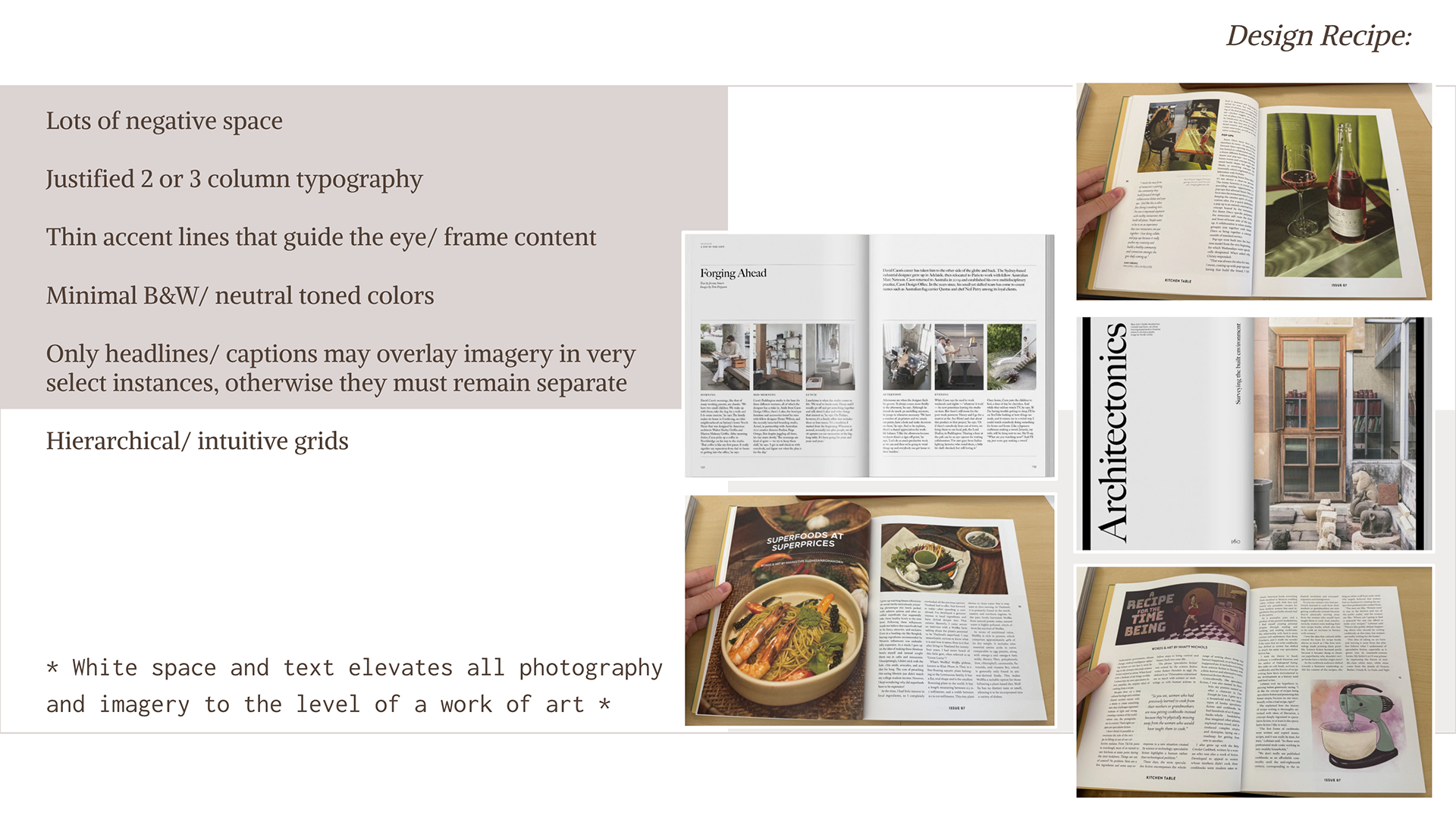
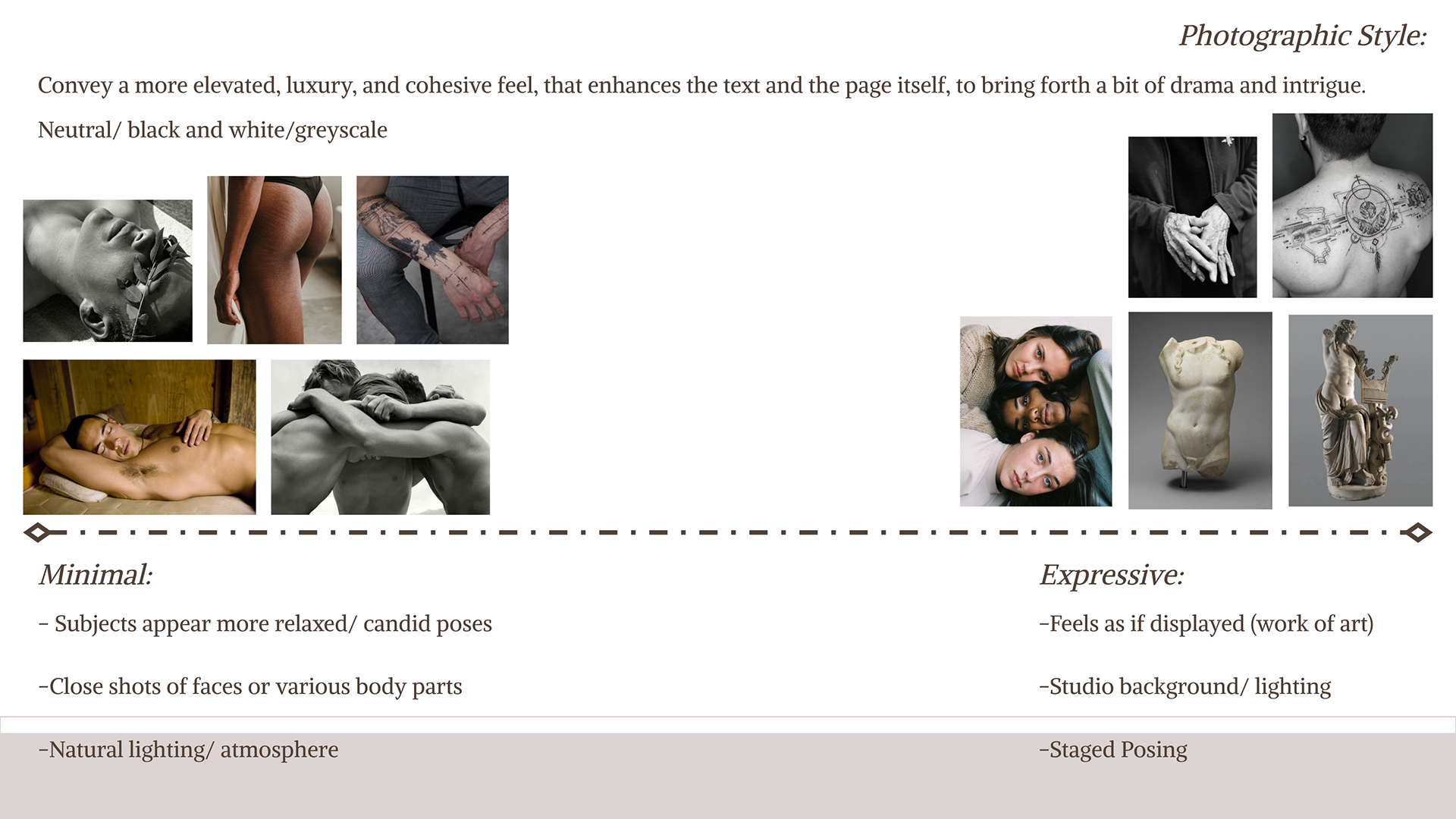
Managing such a large-scale publication required a shift to a more systematic approach. I began by developing a "design recipe" — constraints in style, typography, texture, and photography — to maintain a consistent thread throughout a busy workflow. I learned to implement a "less is more" philosophy, and trust my own design capabilities.
I challenged myself to a limited color palette and a single typeface (Adobe Jenson). When utilizing more minimal graphic elements and emphasizing white space, it is crucial to verify that all microtype is perfect, or errors will be especially striking. Photography was curated to mirror the specific tones of each article, while adhering to an editorial and minimalist aesthetic.
I learned that a blank page can't hurt you (sounds silly, I know); it just needs text and an image placeholder. Providing initial elements is the best way to start a flow.
Above all, this magazine ignited a passion for print, layout, and editorial design in a way I never expected. If anything, this project taught me to practice restraint. While I wanted to keep adding more at every turn, I learned the best design often comes from what you choose to leave out.
Printing & Binding Process
To better comprehend the "lifecycle" of a publication, I moved from a digital workflow to physical assembly. By printing and manually binding the magazine early in the timeline, I was able to mitigate technical hurdles, navigate paper types, and ensure color matching was precise. This patient production approach led to a professional outcome, and ignited a new passion for print.
Design x is a conceptual prototype. All layout and production design are my own work, utilizing a curated selection of external articles and photography to showcase a complete editorial vision. All credit belongs to the original creators.